 Github Stars:
 Last Commit:
  Created:


Overview
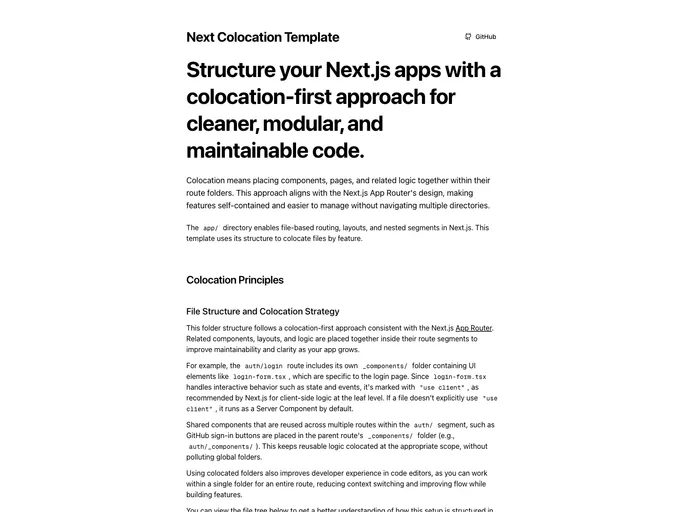
Structuring Next.js applications in a colocation-first approach has proven to be an essential practice for maintaining clean and modular code. By grouping components, pages, and related logic within their respective route folders, developers can keep features self-contained and easier to manage. This method streamlines the development process by aligning with the Next.js App Router’s design, allowing for a more efficient workflow as projects grow.
The benefits of this approach extend beyond organization; it enhances the developer experience within code editors by reducing context switching. Developers can focus on one route at a time without navigating through numerous directories, making it easier to build features and maintain clarity.
Features
Colocation Strategy: All components and logic related to a specific feature are placed together in their route segments, improving clarity and manageability as applications expand.
File-Based Routing: Takes full advantage of Next.js’s app directory for seamless file-based routing and nested segments, enabling a logical and intuitive navigation structure.
Client-Server Management: Automatically distinguishes between client and server components, improving performance and functionality based on whether a file uses “use client”.
Private Components Organization: Using the underscore prefix for folders like _components keeps routing logic separate from UI components, enhancing project organization.
Developer Experience: Reduces context switching by allowing developers to work within a single folder, making the coding process smoother and more efficient.
Reusable Logic Placement: Shared components are colocated at the appropriate scope, preventing pollution of global folders and promoting reuse across multiple routes.
Optional Top-Level Routing Groups: Organizes routes without affecting the URL paths, offering flexibility in structuring applications without compromising usability.
Starter Project Available: A ready-to-use template that includes essential features like a dashboard and authentication pages, facilitating faster prototyping for new projects.