 Github Stars:
 Last Commit:
  Created:



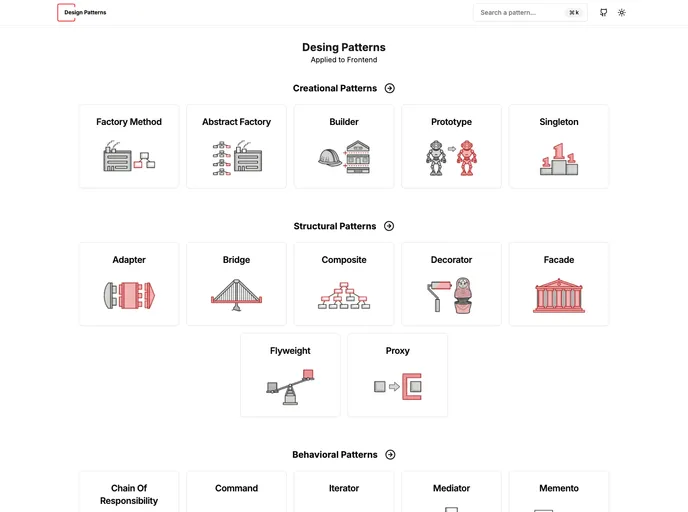
Overview
Frontend development continuously evolves, and incorporating design patterns can significantly enhance the quality and maintainability of your code. This exploration of design patterns applied to Frontend focuses on their ability to offer structured solutions to common development problems, ensuring that developers can create cleaner, more efficient applications. Understanding these patterns not only streamlines code organization but also fosters reusability and better collaboration within teams.
By leveraging these proven methodologies, developers can tackle challenges ranging from building adaptable UI components to managing complex application states. This resource serves as a guide to help you understand the practical applications of various design patterns, ultimately leading to more robust and maintainable Frontend architecture.
Features
- Flexible UI Components: Design patterns facilitate the creation of customizable UI components that can adapt to various user needs and designs.
- State Management: They provide effective solutions for managing complex workflows and state transitions, improving the overall user experience.
- API Integration: Patterns assist in adapting external libraries or APIs, allowing for more seamless integration with different interfaces.
- Dynamic Interactions: Implementing these patterns helps in creating dynamic behaviors based on user interactions, enhancing user engagement.
- Separation of Concerns: They encourage code modularity, ensuring that distinct functionalities are encapsulated, leading to easier maintenance.
- Performance Optimization: Design patterns can be integral in optimizing resource usage, enhancing the performance of the application.
- Coding Standards: They promote consistent coding standards and best practices within development teams, standardizing quality across the project.