 Github Stars:
 Last Commit:
  Created:

Overview
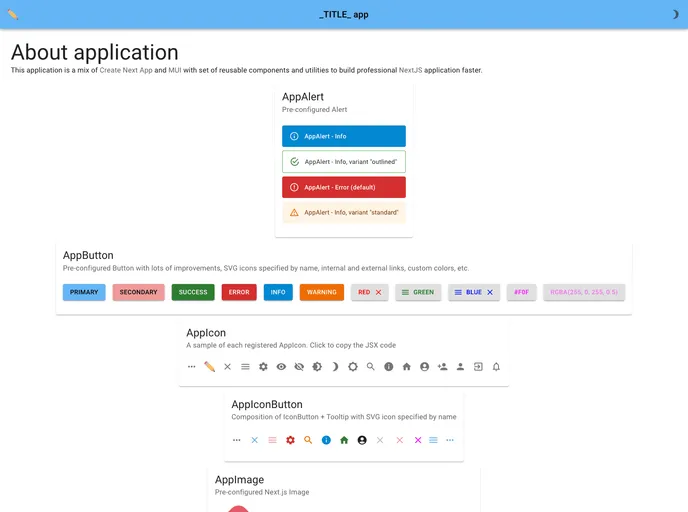
This article is a product analysis of a starter project for Next.js with Pages Router + Material UI using TypeScript. The project provides a mix of Create Next App and MUI with a set of reusable components and utilities, aiming to help developers build professional NextJS applications faster. However, the author warns that the template could be deprecated in the future as the App Router is becoming the preferred choice. The article also provides instructions on how to install and use the starter project.
Features
- Combination of Create Next App and MUI
- Reusable components and utilities
- TypeScript integration
- Development mode with live reload
- Code formatting and linting support
- Test runner with interactive watch mode
- Production and local development build options
- Deprecated static site generator version for building SSG
Installation
To install the starter project, follow these steps:
- Clone or download the repository from
https://github.com/karpolan/nextjs-with-pages-mui-starter-ts - Copy the
.env.samplefile and rename it to.env - Replace the
_TITLE_and_DESCRIPTION_placeholders in all files with your own desired texts - Check and resolve any
// TODO:directives in the code - Add your own code to customize the application
After installation, the following scripts are available for use:
npm run devoryarn dev: Runs the app in development mode athttp://localhost:3000npm run lintoryarn lint: Checks the code for errors and missing thingsnpm run formatoryarn format: Formats the code according to the Prettier configurationnpm testoryarn test: Launches the test runner in interactive watch modenpm run buildoryarn build: Builds the app for production or local development to the.nextfolderyarn build:staticornpm run build:static: (deprecated) Builds the static site generator (SSG) version of the app in theoutfolder
Summary
This product analysis discusses a starter project for Next.js with Pages Router + Material UI using TypeScript. It highlights the key features, installation process, and available scripts to run and build the application. The article also mentions the possible deprecation of this template in the future due to the preference towards the App Router.